Showing posts with label feature. Show all posts

Monday, 10 March 2014

My Newfound Love Of Comic Zines

Image taken from Wikipedia (in public domain)

This is a guest post by Fliss, founder of SW London and Surrey Zine Collective - thanks so much! 

There can be a divide between perzines/text-heavy zines and illustration/comic/art zines, though they sometimes meet in the middle. I don't mind admitting that I used to have a barrier between me and comic 'zines. It's true that I will never have any love for the super-hero stuff - though I don't dismiss that trait of loving them, in other people - but now I have seriously warmed to comic style 'zines. That is, hand-drawn picture-filled 'zines, sometimes done as strips/stories, sometimes as accompaniment to personal writing, sometimes the dominant narrative.

I think the zines that first turned me around was a music zine by Sammy Boras. The topic and slant of humour helped, but her drawings/comics are just so skilful and full of personality. The first zine by Sammy Boras I bought was This is Not A Serious Music Publication, and it was really good fun. The bands did not have to be ones I know/love for me to fall in love with Sammy's work. She makes many other zines, so do check out her Etsy shop. She makes the most incredible zine badges too!

Soon after this, I met Lisa Stockley at a zine fair, and was so smitten by her perzine which also had her drawings in. The Jellygoose Chronicles zine is just so cool! It was a real breath of fresh air - dealing with serious issues like bulimia, as well as larking about and jotting down nice bits of personal trivia, and with the most detailed and careful and wonderful drawings/art. This felt like a real turning point when I became totally open to more comic style zines.

Another zine that gets my vote is by Joe Besford. His work with Earthling Brains is excellent fun. He uploads a weekly comic strip, chronicling little life incidents/thoughts/jokes, on his site. But I much prefer to have the printed collection to go through. One of my favourite strips recently from him was the one about work! It features a contamination tank and at one end is the 'work' version of Joe all tired and stressed in a work suit - and at the other end is the smiling, relaxed, comfy-clothed Joe. He also sneaks in quite as few indie references, which I always appreciate.

Comics are a good way of promoting political messages quickly or with humour. There are a lot of really good ones like this for sale at 56a Infoshop in London.


I'm sure to be overlooking a good many other great comic zines here, but I just wanted to start writing about the ones I have started to find and enjoy so far. I am looking forward to discovering a lot more comic zines in the future.

Sunday, 4 August 2013

International Zine Month: JUST FOR FUN WEEK (week 5)


Well, we're at the end of International Zine Month, and it's been a blast. Thank you all for playing along, I hope you've enjoyed too! Here is the final week's round-up:

JUST FOR FUN WEEK

28 - Cook with a recipe from a zine or cook zine!
Ok, confession time - I had every intention of doing this, but didn't get round to it in the end, mostly due to post-work tiredness.  FAIL.

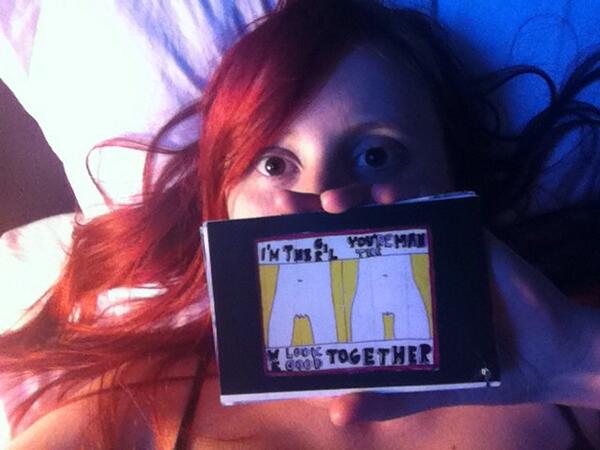
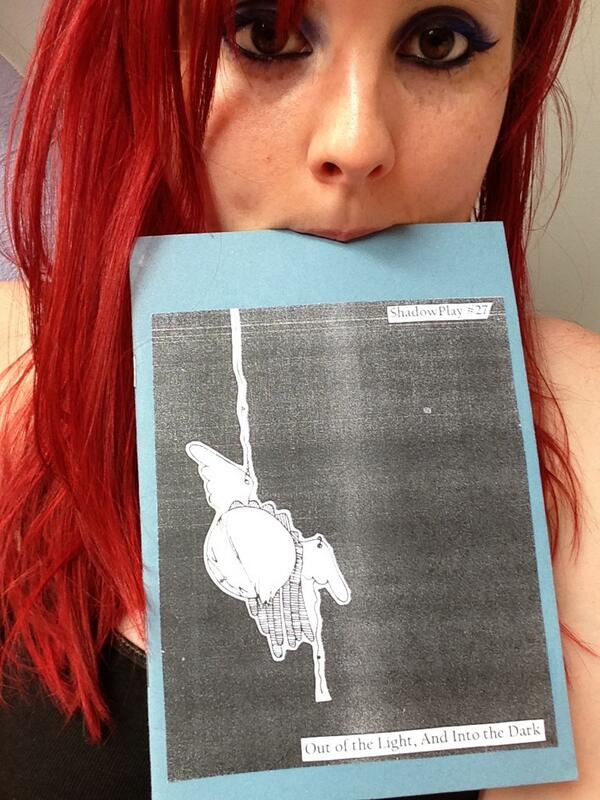
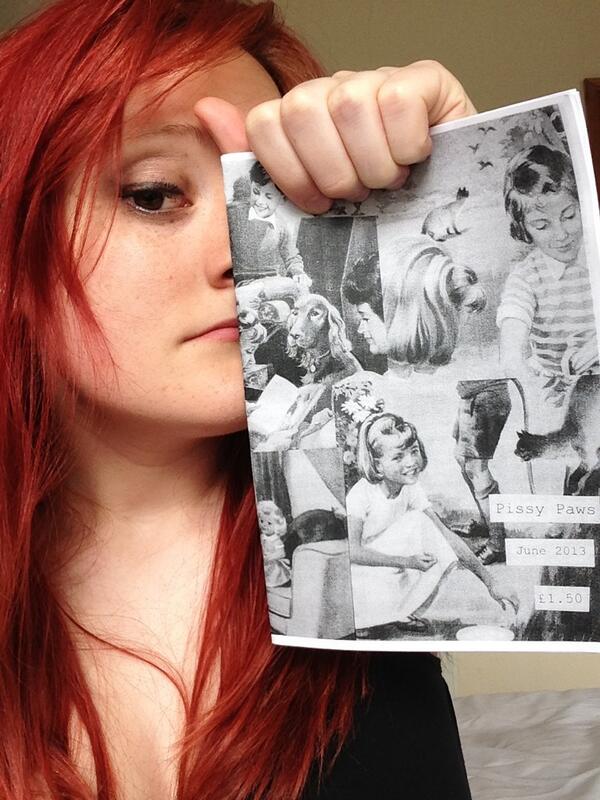
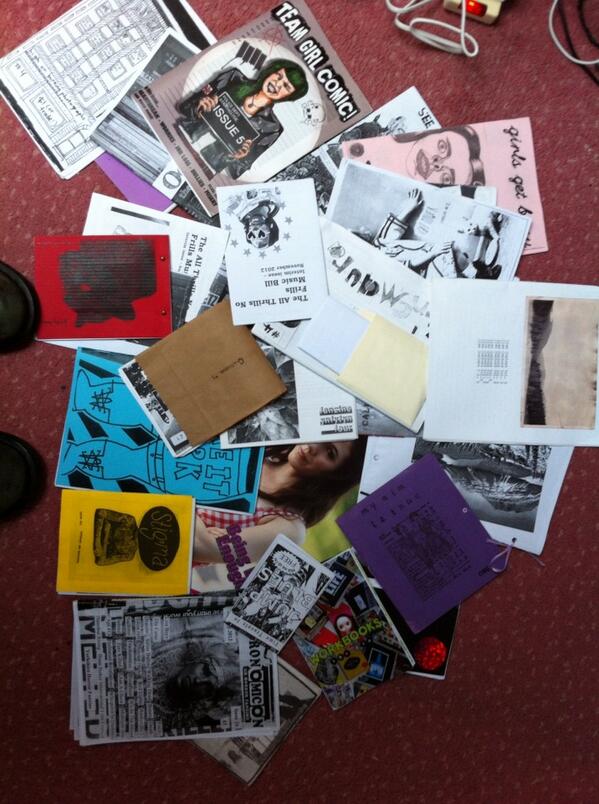
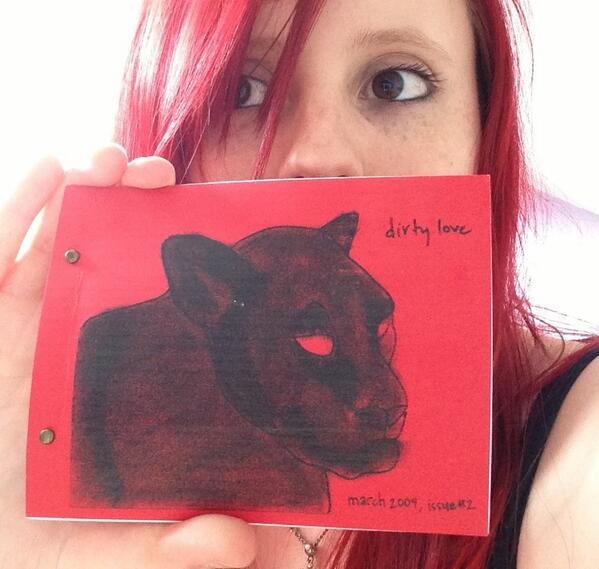
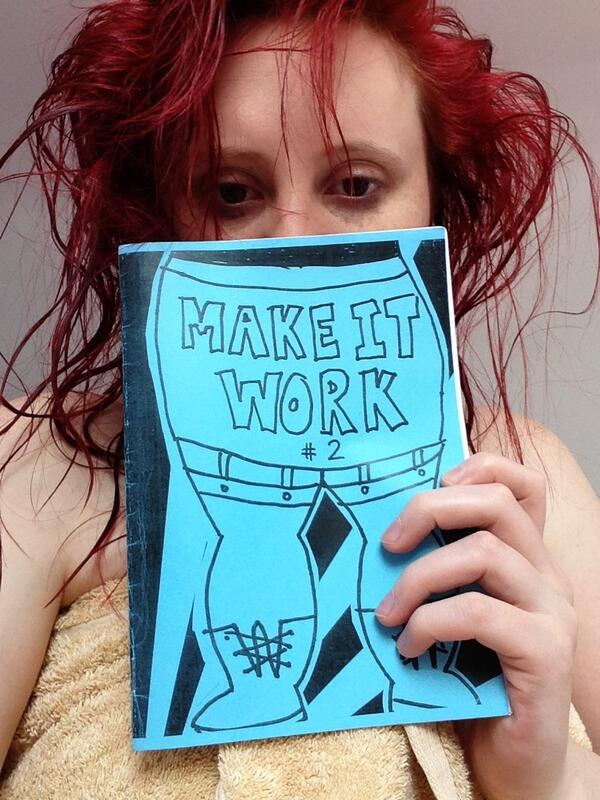
29- Post a photo online of you with your zine or your zine collection.
Here's me with my new zine!


30 - Read some zines! Lay in bed and read zines all day if you can!
Agh, another big fat fail.  I should have cleared the afternoon and just stayed in bed reading zines, but instead I made plans and spent my afternoon/evening doing boring adult chores and such. Sigh.

31 - Log into WeMakeZines and write about your experience or write about it on your own blog.
Done and done!

Extra credit - Read a zine every day


Review of IZM 2013

It was lots of fun, especially tweeting every day about the challenges, and sharing other people's experiences online.  However, with retrospect pledging to do all 31 was very ambitious, and only could've been accomplished if I'd actually spent some time planning ahead what I was going to do, and making time for the challenges on the days needed (e.g. day 30).  Perhaps next year I'll just pick a few to do.

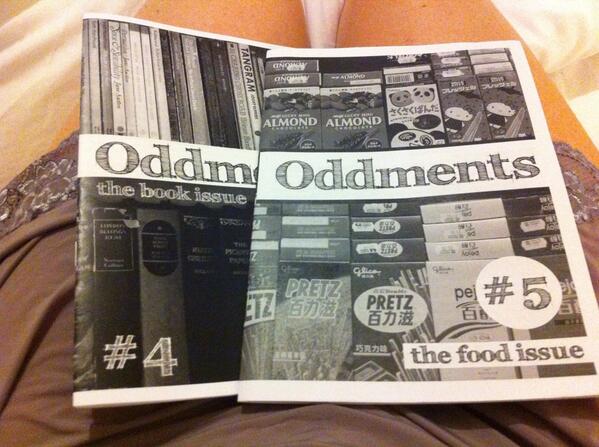
Reading a zine a day was such a rewarding challenge!  I don't make as much time for reading zines as I should, as I often get bogged down by doing "more important things" like work stuff and writing for this blog. IZM definitely reminded me why I love reading zines, and from now on I'm going to make an effort to read them more often.  Here are all the zines I read during the month:


I'm going to write a short review of each one over the weekend, so keep your eyes open for that! - changed my mind about this, am too busy and run down right now, sowwy :(

If you missed it, you can read my review of each week here:

 - Week 1: I Love Zines Week

 - Week 2: Postal Appreciation Week

 - Week 3: Zine Distribution Week

 - Week 4: Zine Library and Education Week

Monday, 15 July 2013

INTERNATIONAL ZINE MONTH: Postal Appreciation week (week 2)


Hello zinesters!  How are you finding International Zine Month so far?  Here at Spill the Zines I'm taking part in all 31 tasks for IZM as set by Alex Wrekk; make sure you follow my progress on Facebook and Twitter! Here's what I did this week:


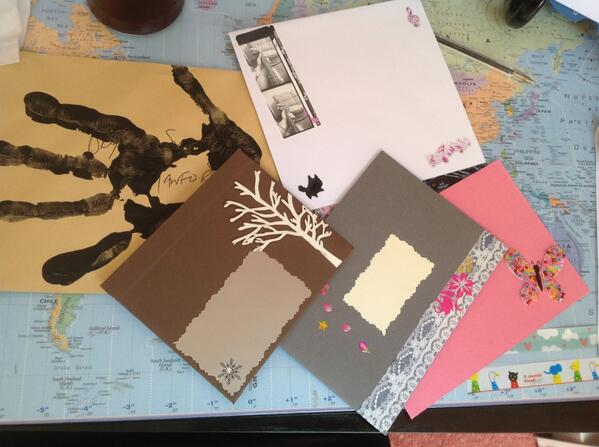
7 – Make or decorate some envelopes or postcards to get ready for the week.  
This was fiddly, but lots of fun! See pic below.

8- Make a little flyer for your zine to send out with orders and see if other people will trade for stacks of them so you can all promote each other (beginning of Ramadan, Muslim zine friends can pick back up on August 8th).
Done!  I've also been organising flyer trades via this We Make Zines group.  Here's the STZ flyer:


And here's my perzine flyer:


9 – Write a letter to a zine maker that you don’t know.
I wrote to Donna, the lady behind UK perzine Tragic Boffin, letting her know how much I've enjoyed reading her zines recently.

10 – Send a care package to a zine creator that you do know.
I sent mine to my zine friend Rachel, who has been going through a bit of a difficult time at the moment.  I included some flyers, minizines, pin badges, stickers, and some herbal tea.


11 – Make some mail art!
Not being very technically skilled, my idea of mail art mostly consisted of gluing stickers, card-making decorations and bits of coloured paper onto my envelopes, but it was still lots of fun, and quite rewarding.


12 – Send your zine out to be reviewed.
I sent mine to Pushpin Zines, a zine blog created by the lady behind Asking for Trouble zine and craft distro.

13 – Zine Trade Day! Ask someone if they would like to trade zines with you.
I'm currently working on the 12th issue of my perzine, and have been arranging lots of advanced trades with my UK zine comrades via Twitter :)

14 – ValenZINE’s Day! Write to your zine crush, or write to ZineCrush.com
My zine crush is Miss Tukru, the talented lady behind Your Pretty Face... and Vampire Sushi distro.  I wrote her a little love postcard :)

Read a zine every day
Here are mine from the week:


This week is ZINE DISTRIBUTION WEEK - what will you be getting up to?  Start with today's task - leave a zine in public for someone else to find :)  


Sunday, 7 July 2013

INTERNATIONAL ZINE MONTH 2013: I Love Zines week (week 1)


Hello comrades!

As you know, July is International Zine Month, and every year IZM creator Alex Wrekk creates a list of 31 activities to do throughout the month, a task every day (above).  I've decided this year to pledge to do every single one, and for extra credit I'm reading a new zine every day.  I've been writing about my daily progress on the STZ Facebook and Twitter pages; here is a round-up of the past week!

IZM WEEK 1: 'I LOVE ZINES' WEEK


1 – Sign up or sign in to WeMakeZines.ning.com and write about IZM and what you plans are to celebrate zines this month! 
I wrote about IZM on this We Make Zines thread.  Get over there and say hi!  A load of other people have also written about their plans for July, so do check it out for some interesting blogs to add to your blogroll this month.

2 – Make a Top 10 list of reasons why your love zines.
1. Content is honest and from the heart
2. Not motivated by profit
3. Can be left lying around for people to find/take
4. Cheap to buy
5. Cheap and easy to make
6. Ephemeral/time-capsule quality
7. Portable
8. Create a sense of community
9. Connects people
10. Anyone can make their own!

3 – Zine Distro Appreciation Day! Order from a zine distro.
I ordered loads of zines from Vampire Sushi, a lovely little UK feminist/perzine distro.

4 – Reread your favorite zines and remind yourself why you love them so much.
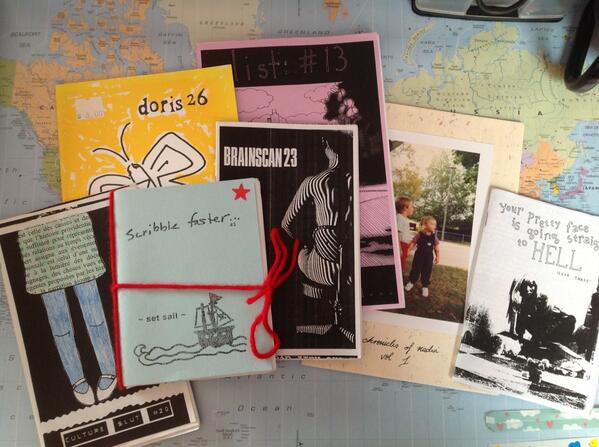
Here are some of my favourite zines that I enjoyed flicking through again this week:


5 – Teach yourself a new zine skill: learn how to book bind, make a 1 page zine, photocopier art, etc.
Ok, confession time - it was my intention to teach myself how to do photocopier art, but I was in work all day and had a busy stressful day, so didn't get around to doing this today :(  I will make time for it next week instead, during my week off!  Forgive me?

6 – Check out ZineWiki.org and add your zine or update existing entries.
The entries on Spill the Zines, Catherine Elms, and Here In My Head have all been updated - take a look!  If you make a zine, why not pop over and add your page to the wiki?

Read a zine every day
Here are mine from the week:


---

Next week is POSTAL APPRECIATION WEEK - what will you be getting up to?  Start with today's task - make or decorate some envelopes or postcards to get ready for the week. :)


Sunday, 17 February 2013

Guest Post: How I make my zines, by Emma Falconer


This is a guest post written by Emma Jane Falconer, which originally appeared on her blog 'Emma Makes Stuff'.  Emma is a zinester, illustrator, photographer, and film-maker.  You can find out more about her work at www.emmajanefalconer.com

This is how I personally make my zines, mixed in with a few tips for beginners. There's no right or wrong way (aside from doing things like accidentally making it unreadable once photocopied or forgetting about your margins and cutting off half the text). If you want a more in-depth guide to all things zine-related, I can recommend Stolen Sharpie Revolution. You can see all the back issues of my zines on my website.

What I put in them:

notebooks

I have these two notebooks. The small one is for jotting down ideas. When I think of things, it's usually not when I have the time to actually make them. If I don't write them down, I tend to forget.

idea book

The ideas notebook has pages set aside for various categories of things.

writing book

I usually write out the contents longhand first. I revise and edit them when I type them up on the computer. If I write them straight on the computer I'm more likely to get distracted. The important thing is to write about the things that personally interest you, not what you feel you "should" write about. Fads in zines come and go like anything else, and sometimes it seems like everyone is writing about a certain topic, and then next year it's something different.

Making the pages:
I make the pages on separate sheets and then glue them onto one master sheet.

collage box

I keep all sorts of interesting scraps in this old biscuit tin for zine and collage use. Things like magazine pictures, food packaging and travel tickets.

pages

For the backgrounds I cut pieces of paper about 1cm smaller in each direction than the finished page. That way the margins are built in, and I can't go over them. Things like old wrapping paper, tourist maps, the inside of business envelopes and magazine pages are good sources. You want high contrast patterns, things with delicate colours don't photocopy well. I try to have facing pages have the same background design if they're part of the same article.

papers

I also print off some patterns on the computer. You can get books of copyright free patterns that you are allowed to use for small-scale projects like zines.

scraps

I keep all kinds of interesting pictures in the tin too. The blue thing is a Bulgarian metro ticket. If I want to use my own photos, I up the contrast before printing them on the computer. Again think about how well the pictures will copy.

tools

The tools of the trade: glue, scissors, markers (I use Posca ones), correction pen. I recommend sticking to the well-known brands of glue. I've had bad experiences with cheap glue sticks not sticking very well. I wouldn't use fancy or best scissors, because you *will* end up with glue marks on them. I keep a scrap piece of paper to one side to glue on.

adding text

I print out my text set into columns. For one column per landscape page I make it 8cm across, for two 5.5 cm. I stick to 9/10 pt Baskerville for the text, and pick one decorative font per issue to use for titles. Too many different jarring fonts hurt your readers' eyes. The fine-tipped scissors come in very useful for this stage. They were £2 in Wilko. In the UK Wilkinson's is a great source for zine stuff. They sell cheap card-making supplies, which are the same things that are useful for zines (I swear by their paper folding tools).

I do pages when I feel like it, and set them aside until I have 24 that I feel will make an issue together. Sometimes they sit in the box for quite a while until they find a home. When I've got enough, I arrange them in order, and then write the pages numbers on the corners. Numbering your pages is very important, it makes assembling much easier once you've photocopied.

collating

I label my master sheet with the numbers (some tips here) and glue the page sheets on, then I'm ready to photocopy.

Sunday, 2 December 2012

Guest Post: Not My Genre!


This is a guest post by Sarah E. Hoffman about stretching your zine writing into new genres.  Sarah is a zinester, blogger, academic and gastronomist. She enjoys picnics, the smell of freshly baked bread and bobo tea. When stressed she bakes until the flour runs out. Sarah is married to a very understanding non-foodie, whom she is in the process of converting. Find her @Sarah999 or http://wingedsnail99.blogspot.com.

image via http://bit.ly/Xfqmi0


I used to have a variety of hobbies and interests but in the last five years I have become a person that has only one hobby. My hobby has permeated every aspect of my life and has become the lenses through which I approach every topic. My life is all food, all the time. However, this does not mean that I only write about carrots. I write about lessons, history, movement, surprise, and a variety of other topics. The following is an articulation of the process that I use to approach a writing prompt that does not strictly fall within the category of food.

Don't make assumptions. Your readers won't storm off in a huff if you write about something that is different from what you usually write about. Would you?

Keep your voice. Consistently writing in a unique voice can be the thread that ties all of your writing together.

Stretch. Find a call for submission that is the antithesis of your chosen topic and write a piece for it.

Brainstorm. Give each call for submission careful consideration. There is usually a way to write about your area while respecting the guidelines of the zine.

Make mistakes. It is acceptable to give up on a submission because the topic is too disparate from your area of interest.

Following this framework has the potential to make your contribution unique. For example, the expected contributions on the topic of red velvet cake would include family traditions, recipes, and birthday cake memories. The submission that results from combining robots and red velvet cake or bats and red velvet cake would be unique. If you write about the prompt through the lenses of a particular topic you will be remembered. Isn't that what we all strive for?

Sunday, 15 July 2012

Favourite Zine Series #1: Sugar Paper


This is a guest post written by Caitlin Beth.  Caitlin is a feminist, zinester, ukelele player, and amateur music journalist.  

You’d pretty much have to be living under a rock these days to not have noticed a massive resurgence in crafts. Whether this is a feminist issue or not is another discussion for another time, but there is no denying that what was once seen as traditional pursuits, like knitting and baking, are all the rage these days, with both women and men. Riding the crest of this wave is the wonderful craft zine, Sugar Paper.

Every issue of the zine sees its two writers, Kandy and Seleena, set out 20 make and do projects that can be tackled by absolutely anyone with a minimum of cost. Sugar Paper makes it outrageously easy for anyone to give the various projects a go, and the way the zine is written makes the projects accessible, and makes them seem incredibly easy, which they very often are.

Everything about the Sugar Paper series screams DIY from the covers to the projects themselves. The 20 DIY projects in issue range from anything to knitting a scarf, baking a cake that looks like a burger, encouraging readers to vote, and even dance routines! Most of the issues come with free gifts too, making it even easier to get involved.

The format and the design of the zines are delightfully kitsch and retro, reminiscent of the old-school girls magazines that many of us grew up with, with the content being colourful, fun, and irreverent. The cover is always drawn by a guest illustrator, giving each issue a fresh feeling.  Many of the projects are written by guest writers too, making this a collaborative zine effort.

On Kandy and Seleena’s BigCartel store, you can buy all 9 issues of Sugar Paper, and the girls have also very kindly put together craft kits to buy too, with kits dedicated to cross-stitch and knitting, amongst others. You can also find the girls at the Sugar Paper blog, a blog just as delightful as their zine, which chronicles the pair’s adventures, as well as offering all sorts of crafty and arty inspiration.

Sugar Paper is the ideal zine to pick up if, like me, you love picking up knowledge and learning stuff from your zines. For someone as craft-phobic as I previously was, this has definitely passed on the bug. The girls recently contributed to the wonderful State of Craft book too, which is also really fantastic if Sugar Paper has whet your appetite for making and doing. The 9th issue of the zine has just been released, and is available to purchase right now on the Sugar Paper store: sugarpaper.bigcartel.com. The Sugar Paper blog can be found at www.sugarpapergang.blogspot.com.

Sunday, 3 June 2012

Guest Post: How To Run A Zine Event


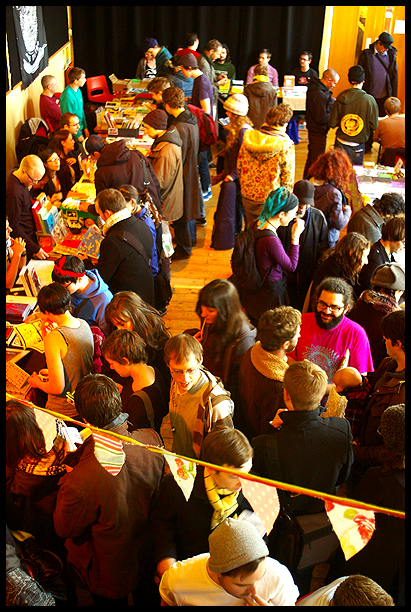
crowd at Brighton Zinefest 2010 - image by Emma Jane Falconer


This is a guest post written by Emma Jane Falconer, which originally appeared on her blog 'Emma Makes Stuff'.  Emma is a zinester, illustrator, photographer, and film-maker.  You can find out more about her work at www.emmajanefalconer.com


For 3 years I was part of the group that ran the Brighton Zinefest. We started just with the idea it would be fun to have a zine event in Brighton and managed to build a successful and fun event. Sadly we don't run it any more because hardly any of the original organisers live in Brighton any more, and nobody appeared to take over, and it just wasn't practical to hold another.

People have occasionally asked or emailed me for tips about how to do these things, and rather than repeat myself I thought I might as well write this, and just refer people to it. Most of the info is from my experience of being part of running something myself, and from observations about other zine events I have attended over the years. I might come across as some kind of table-measuring organisation obsessive here, but all this preparation stuff makes the final event far less stressful. I'm sorry if some of this is very obvious advice, but sometimes it's easy to ignore the obvious when you're caught up in something. Hopefully I haven't missed anything important myself. I should also add that there is no 100% right way to do these things, but I hope these are practical tips that will save people stress.

Before you start:
Here are my tips

* You are not going to make any money from holding a zine event. 

* Only run a small-scale event by yourself. If you want to hold a bigger event, it's best to be part of a group. Otherwise you are likely to die of stress.

* If you have a group, you need to decide from the outset how it will be run. For the Brighton Zinefest we operated as a collective (with 5-7 per year), where each member had equal say and decisions were made by consensus. We recognised that people had lives outside of the event, and kept minutes of our meetings and emailed them to people if they couldn't make it that month, and the members increased and decreased their involvement week to week to fit in around their lives. Things ran very well because we respected each other and worked co-operatively. Bringing office politics and power struggles into organising an event that's supposed to be fun is pointless.

*Don't over-commit yourself. It's unrealistic to think that you will live, eat and breathe organising this event, and unrealistic to expect anyone else to. You also have a life, don't forget about that.

*On the other hand, don't expect to be able to skip out on all the tedious organising stuff before the event and expect it to run smoothly.

* Use people's strengths and work round their weaknesses. For instance if you're someone who tends to panic, get someone with a cooler head to deal with things that go wrong last minute and so on. Make use of people's contacts and real-life jobs and so on as well. For instance, one of our organisers was very involved with music and putting on bands, so he was able to organise a fund-raising gig much more easily than any of the other members of the group.

* Make a spreadsheet to keep track of finances from the outset and be diligent about it. Don't sink much of your own money into an event, especially if it's your first. You're better off holding something small in a cheap/free venue to start out with.

* Be prompt and organised about answering emails, and if you work in a group make sure people share their information so everyone knows what's happening and who's dealing with what.

* Don't underestimate how much time it takes to organise things. Trying to organise a huge event in a month is just going to be painful. If you don't have much time to spare, keep it small.

Venue:

The first step is finding a venue and choose a date and time to book it. It's unlikely you have much of a budget, especially if it's your first event. There's not much money in selling zines, so the stallholders won't be willing to spend much for stall fees, and visitors don't really want to pay much of an entrance fee, so you need to find somewhere cheap. Holding a fund-raiser before hand is often better than trying to get stall-holders to pay more for stalls. Community halls, schools, universities and libraries often have suitable rooms available for low prices, and are quite likely to give you a heavy discount or even let you use it for free for a non-profit thing like a zine fair, especially if there are going to be free workshops. They also have tables and chairs already there, which is very important. Weekends tend to be best, because people are more likely to be free to visit then. In the UK afternoon fairs 12-5 seem to work the best, but you should choose what works the best in your country/culture.

It's also important to consider accessibility. It's very likely that people with wheelchairs, walking sticks, buggies and other things that don't go very well with lots of stairs will want to come. This is another reason why places like community centres, schools, etc are a good venue to choose, because they tend to be required by law in most countries to be equipped with step free entrances, lifts, disabled toilets etc. Places like universities also often have things like induction loops for hearing aids.

Find out what the venue's policies/facilities are regarding food. They might have a café in the building and not allow separate sales of cake, refreshments etc, they might not allow home-cooked food that's not from a certified kitchen or they might have a kitchen you can use for whatever you want as long as it's left clean (this is the most common thing in the UK). In the UK (I don't know about other countries) it's very popular for people to bring cakes to either sell from their stall or to donate to the event as a fund-raiser, and it's important to know if the venue allows this.

The ideal venue is accessible without stairs (so either is on the ground floor, or has ramps or lifts), has a generously sized main room for stalls, plenty of tables and chairs, another smaller room for workshops, facilities to make drinks, decent toilet facilities, a quieter area over to one side to let people relax and chat ( a craft table or library box of zines to browse is also nice in this area), is easy to get to and has parking. Of course it's not so easy to always find such a perfect place. In our first year we used a local hall that we were offered for free. It was accessible, had a kitchen, a stage, tables, a car park, clean toilets, and was in the town centre. The downside was that there was no separate room for workshops (we ended up having them at a local café/social club place), the hall was quite small, so it got very crowded, and to get to the kitchen you had to walk over the stage.

The second and third years we moved to a similar but larger hall, which offered us a very cheap rate. It had a kitchen with a serving counter onto the main room and separate rooms for workshops, but we didn't get to use all of the available space, because some of the extra rooms were up steep stairs, and it didn't seem fair to put too much up there (it's a very old building run on a low budget, and I think they're trying to get money for a stair lift). In the end we ended up putting six or so stalls up there, because there was literally no-where else to put them on the ground floor, but we preferred to keep as much as possible downstairs. The other disadvantage was that it was in more of a residential area, and on a steep hill, which makes it less likely to get curious passers-by pop in.

If you can, try to have a sitting down area with some kind of craft activity. It can be something as simple as some old magazines and pictures for making collages and some paper and colouring things on a small table in a corner. People with children will thank you for this. A popular thing to do is provide pre-cut sheets of paper for people to make a page for a collective zine, and a box to leave them in with a sign up sheet for contact details if you'd like to see the finished zine from the day.

Allocating stalls:

Before you go advertising or allocating any stalls you need to go to the venue and have a physical “dress rehearsal” with the tables and chairs. The inventories/floor plans venues will give you are often out of date or inaccurate. It's best to have 2 sizes of stall, small and large. Usually these are done as full or half tables on the typical large painting tables that most venues have. I've been to events before where they try to cram in 1/3 tables and it just gets cramped and messy. In my opinion you're better off having fewer stalls fitted in better. It's very important to know how many tables you actually have and how they fit into the room. I once went to a zine event and there weren't actually enough tables or chairs for all the people they'd given stalls to. I was running late due to a transport problem, and I got there all flustered and hot only to find I didn't even have a stall any more, and decided to not bother with the fair. Luckily I hadn't travelled very far to get there.

Large stalls are for people with lots of stock: distros and people with lots of back issues. It annoys the stallholders to get to an event and find that they have been given half a table for 15 different issues of a zine or a whole distro, and there's someone with a full table for 2 different issues.

Lay out the tables with plenty of room for people to walk, at least 6ft5 / 2m if possible, and try to avoid creating areas where people can get cornered once the event gets busy. Having a gap between tables for stallholders to get out is also helpful. Make sure to put out enough chairs: bare minimum is one chair per small stall and two per large stall. Also make sure that space allocation is fair, measure all the tables and give a set amount of space for large and small stalls. It's not fair to just go “half tables!” when all the tables are different sizes. Mark out your stall boundaries with masking tape and make a careful floor plan. This might seem excessive or pernickety, but it comes in very useful on the actual day, and means you don't accidentally over-allocate stalls, and you know where everything is meant to go. You should also allocate a large table for people to bring individual zines to sell, and a table for freebies.

For allocating stalls I think it's best to set a deadline for applications rather than doing first come, first served, because it stops people with great zines missing out on a stall because they didn't hear about the event. When you ask for applications you need to have clear policies on what people can have on their stalls spelled out in the info. For instance we said crafts are welcome, but stalls must be 75% zine, and we don't accept zines with discriminatory material (racist, sexist, homophobic, etc, etc). In the application ask people what size stall they want, if they are a distro or individuals, and to describe what their zine(s) is/are about and provide a link to their website or Etsy. If you are clear about these things on the outset you're far less likely to suddenly find on the day that you've given a stall to someone who runs a Klu Klux Klan zine or something. If you don't specify tables must be majority zine, sometimes it can turn into more of a craft fair with the odd zine. We also came up with a suggested price guide after visiting an event where people were trying to sell standard photocopied b/w zines for ludicrously inflated prices.

If someone writes in and says “I don't have any zines yet, but I plan to have made one by the event”, don't give them a table. Who knows if they will actually follow through. If they finish it in time, they can always put their zine on the individual zine table.

When you have chosen what people to give stalls to, remember to send a polite email to the people you turned down. Don't leave notifying people too late. Often people travel long distances to get to zine events, and if you leave it too long they might not be able to come, because they often rely on cheap advance tickets for travel. Give the stallholders plenty of info weeks in advance: travel directions, the time they should arrive, and a phone number to call on the day if they have problems getting to the venue or finding it. Make sure the phone number you give will actually be answered.

Workshops and volunteers:
Workshops at zine events are always really popular, and quite easy to organise at very low cost. You can usually get volunteers to give them. Popular things include zine readings, talks, discussion panels and demonstrations of DIY skills (we had over the years: screen-printing, basics of zine layout, vegan cooking, basics of comics and bookbinding). Make sure to have a set timetable for workshops, display it on your website/blog, and have it printed large and displayed very prominently at your zine event so people know what's happening, when, and where. Having your workshops in the same room as stalls is a bad idea because it's very easy for people's voices to get drowned out by the bustle of the stalls.

Having volunteers to help with the running on the day will also make it less stressful for you. Volunteers can help set up the tables right at the start, and put them away afterwards. It's good to have someone to mind the individual zines table and a donation bucket if you have one, and to do tea and coffee if you have the facilities.

Promotion:
I think the most important thing to do here is not start too late. It's a good idea to set up a website/blog as soon as you have a venue confirmed. On the website/blog at least have a summary of what will happen at the event, contact details for the organisers, how to apply for a stall and travel directions to the venue. You can also appeal for volunteers to help out on the day.

Get an artistic/designy friend to do you an attractive flyer with the date, time, website/blog, location and full address of the venue. If your flyer looks boring or scrappy and doesn't have the full info it's not going to help you get people to come. Print lots of quarter-sized flyers cheaply. Black and white photocopies are absolutely fine, you don't need to bankrupt yourself with glossy colour printing. Using coloured paper can make them look nice on the cheap. Send flyers to distros months before the event for them to send out with zine orders, and hand out flyers and chat to people at other zine events and other things where you think people might be interested in zines (gigs, craft/diy events etc). If you're shy, maybe get an outgoing friend to help you with this. The personal touch of talking to someone or receiving a flyer with some zines makes far more of an impact than an email or Facebook mailing list. Having a coloured-in digital version of the flyer available on your website/blog for people to post on their own blogs also helps you spread the word.

Make sure to contact your local listings magazine well in advance, they usually require you to send details a month before each issue comes out. Local newspapers are also quite often keen to cover these types of events too, especially if you don't live in a big city, so try to contact them. A few weeks before the event, go round local shops to leave flyers. Places like independent coffee shops, clothes shops and record shops are usually enthusiastic. Chain places usually won't let you. Be polite when you ask. If you have left flyers, return once a week to check up on the levels and replace them if possible.

Don't rely on Facebook events to help you promote. A lot of people get so heavily spammed with events that don't interest them and are happening 3,000 miles away that they barely pay attention to their Facebook invites. There's plenty of people who don't use Facebook or have an account but don't really bother with it too.

On the day:

Get to the venue several hours in advance to set everything up. If you aren't going to get in trouble for it, it's a good idea to fix up paper signs with arrows pointing the way from places like the local bus or train station. Make sure to have a clear sign outside the venue, this will also attract passers-by. Fix a sign on the door visitors should come in by too. If your venue has multiple rooms, fix up signs inside pointing to the other rooms so people don't miss them. If there are other things going on in the same building make sure to have signs showing where your event ends. Simple computer printed sheets of paper are fine for all this. If you have workshops, have large printed timetables of them pinned up everywhere. If your country/region uses multiple languages, try to have signs in all the languages, checked by a competent/native speaker if possible. You want the whole place to be easy to find and to look welcoming.

The stall-holders are usually told to arrive an hour before doors open to the public. All the tables and chairs should be set up before the stall-holders arrive, and I strongly suggest marking out the stall boundaries with tape and putting the stall-holder's name on the space. People tend to spread their stuff out to fill space, and if there's no boundaries marked it's easy to go over your space and not realise until your neighbour arrives and you have to move all your stuff again, which makes set-up take much longer. Having the stalls marked out and named also has the advantage that people can swap stalls to be near a friend without messing up the layout much, because all they have to do is swap the name labels on two same-sized stalls.

Stall-holders always arrive late or get lost, so don't freak out about it, they will get there eventually, and everything will work out fine. This is why giving them your phone number well in advance is a good idea. Having the stalls marked out and named means that if someone does arrive really late they can just be calmly directed to their space, and it hasn't been taken over by someone else, causing a big reshuffle. Have someone at the door with a list of stall-holders, checking them off as you arrive. Once the public start arriving, it's also a good idea to get someone with a microphone/loud voice to announce upcoming workshops.

Hopefully everything should be fun throughout the day, and if things do go wrong, don't worry too much, it's unlikely anyone will die because the zine reading started 20 minutes late. Make sure the person running the individual zine table keeps careful track of how many issues people left, how many sold, and the money made so there are no arguments at the end of the day when people come back to claim their unsold issues and money. When everyone has gone, put the tables away and clean up, and you're done.

Sunday, 1 April 2012

What do you like reading in a zine? An online survey

image by Derek Neuland (http://allthingsordinary.wordpress.com)


Last month, from the Spill the Zines twitter account and Facebook page, I asked for people’s favourite things to read in a zine. This was a great way to crowdsource some ideas on what to include in your own zine if you’re stuck for inspiration, and to share some of our mutual likes and dislikes in the zine world, so I am reproducing the answers here.  Please add your own favourite things in the comments!

---

Rachel (@bransonatron): I love mood-board style collages, poetry and non-fiction pieces! Oh, and attention to detail with decorations, like borders :)

Sarah-Beth (@kittenesque): I like reading about things other people are passionate about, anything that challenges my own views, lists, things about self improvement, cut and paste or hand drawn layouts, reviews of books/music that make you want to immediately check it out.

Sammstein M: doodles!

Louise: Messy cut and paste layouts, handwriting, textured surfaces, layers – something a little different from the usual typed-text-laid-on-dainty-patterns look!

Lucy (@yes_lucy): I like reading reviews or personal reflections on stuff, as long as they're thoughtful and not a rant.

Ingrid: I love self improvement topics, inspirational ways of living against the grain.

Tim M: I like reading something that tells me what's going on in a person's mind, that gives me the impression s/he has some original thoughts and is not hidebound by rigid ideology and that combines humour (not necessarily laugh-out-loud, but some sign of perspective and perception of how beautifully absurd life can be) and seriousness.

Sarah (@wordgeeksarah): funny/unusual perspectives on the world. Anecdotes (rather than entire lifestories), doodles and collagey layouts! sounds a bit callous, by I'd rather read about one isolated event than a general "my life sucks/is awesome" overview!

Lisa: Personal stories, introspection, lists, hopes & dreams, general musings, anything the writer feels very passionate about...

Caitlin (@wondercaitlin): I like stuff that explores the relationship between politics and the personal, and I love authors getting nerdy about the subjects they're passionate about.  Also, lists, great reviews, positive stories, inspirational tutorials, anything to make you get up and go!

Rebecca: life stories, layouts with pretty patterns.

Lizzy (@msdistro): Musings/opinions on life, be they political, reflective, etc. I also like plans, looking forward.

Sarah: cut&paste layouts, personal photos, lots of patterns, textures, stories about life, lists, adventures.

Tracey G: Doodles – especially of maps.

Tasha (@howdoyoutakeit): aesthetically I'm a lover of cut and paste & black and white textured layers and prefer layouts that have been well thought out... the content doesn’t necessarily need to be grammatically accurate but when well written, regardless of topic, passionately… if it was worth the time of day for that person to want to sit down and write it - that's what really does it for me.

Emma: Personal stories/experiences, lists, feminism, collages, interesting layouts (though anything, really, as long as it's honest and well-written).

Thomas B: a tinier zine inside it.

Sunday, 5 February 2012

Feature: Working With Distros

This is a guest post by Lizzy Goddard, who has been running Marching Stars Distro since July 2007.  These opinions are all Lizzy's own. Every distro is different; probably because every distro is run by an actual, gloriously unique person/collective.

Marching Stars at London Zine Symposium 2011

Distros. You’ve heard of them. You’ve seen them around. You might have even ordered from one. Why then are so many zinesters so nervous about working with us?! We want to stock your zines! I’ve run marching stars zine distro (www.marchingstars.co.uk ) for 4 ½ years and this little guide is based on a “Working with Distros” Workshop that I ran at Camden Zine Fest 2011. I hope to run it again at future zine events, because I love talking about distros and my experiences of running one. But more importantly, I want zinesters to feel more comfortable working with us, because we only exist because of YOU and YOUR ZINES.

What is a Distro?

Distro, short for distribution or distributor, quite simply, distributes zines on behalf of zinesters. Lots of zines, in one place. Distro is both a noun and a verb. I run a distro and I distro zines. I truly believe that distros are very much part of the zine community, and here’s why:

Role of a Distro

From a zinester point of view
- get your zine out to a wider audience
- get your zine to a different country
- promotion of your zine
- get your zine in with similar zines
- get your zine sold with other zines you respect and love
- money/shifting your stock
- getting your zine out there without giving your address/etc

From the zine reader point of view
- get lots of different zines in one order
- save on postage
- pick up zines you might night ave otherwise heard about
- lots of similarly themed zines in one place
- might trust the distro owner’s opinion

From the distro owner point of view
- there aren’t other distros selling what you want to buy
- help make lots of zines available in one place
- promote zines in non-zine places (e.g. gigs)
- collect together zines on a certain theme in one place
- help make international zines more accessible here
- not competitive

3 main ways distros work
Quotes taken from ‘Stolen Sharpie Revolution 2’ by Alex Wrekk.

1. Buy zines outright at wholesale prices. “This is when a distro pays you wholesale price for the zines upfront, before they sell any copies or sometimes before they receive them.”
 - Wholesale price: “The discounted price you would offer a distro for buying multiple copies. You can specify a minimum quantity if you like. Most wholesale prices are around 50-70% of the retail price.”
 - Retail price: “The price that you sell a single issue of your zine for and the price you would like other distros to sell you zine for. A high price can detract distros and potential buyers from your zine."
2. Consignment. “When a distro pays you the wholesale price after all or a portion of the zines have sold. Some distros work on a regular time frame like quarterly or monthly. This can vary from distro to distro” 
3. Flat copies. You send the flat pages of your zine to the distro

3 main ways distros sell

1. Online (usually through a website with integrated paypal or online checkout)
2. At shows and events (both zine-specific and non-zine specific)
3. Paper catalogue (good old snail-mail)

Do’s and Don’ts

Do
- reply to emails
- only send zines for consideration that you can make lots of and intend to for quite a while (i.e. not a limited print run)
- include a note with important info on (email address, wholesale/retail price, etc)
- email when you have new issues out
- package zines well when you send them
- keep accurate records
- ask questions if you don’t understand
- send personalised emails
                - maybe look up the distro owners name?
                - tell them how you heard about them? Why you chose to submit to them?
Don’t
- not look at what the distro normally stocks and offer something totally different
- send a zine for consideration and then never reply to emails
- have a ridiculously high wholesale price
- not send zines (either before or after payment), the ultimate ‘not cool’.
- expect to make money out of it

Things you can expect from the distro
Distros are run on love alone. I cannot stress this enough.  But now I’ve put that out there, the following things you can expect from a distro (in due time – life does get in the way sometimes!):
- replies to emails
- accurate records
- zines promptly added to the website
- updated website
- your zines being promoted
- their choosing ‘good’ zines and maintain a certain standard

Distros aren’t for everyone
Sadly selling your zine through a distro isn’t for everyone, but a lot of the problems with distros applying to selling your zine in general.
- No control over who reads your zines/where they end up
- Might work out that you lose money
- Might not like the description of your zine
- Some distros wholesale zines to other distros (they’ll say, but just heads up)
- Producing in the quantities they want if it’s a limited print run
- Zines can stay in distros for months/years after you’ve stopped printing them
- Zero contact with the reader

Rejection
- You might not get a reply. This is probably because it’s really hard for distro owners to reject zines (no-one likes to say no to what people have lovingly created).
- Try not to be too disheartened and consider submitting elsewhere.
- Definitely submit future issues (or ask if it’s ok to submit future issues)
- There are lots of reasons why a distro might reject a zine including space/money and it not ‘fitting’ with other zines stocked. Reasons I’ve, sadly, had to reject zines include: poor spelling/grammar; hard to read; poorly photocopied/put together and too expensive.
- If your zine is rejected, or you just don’t hear from them, feel free to ask why they rejected it and hopefully you’ll get some constructive criticism (or hear it was rejected for some reason out of your control).
- Remember, distros are run on love, so at the end of the day it is the prerogative of the distro owner to decide what they do and don’t want to stock, and that can be a little irrational.

Where to find distros
- The links over there -->
- Google
- Zine fairs/events
- ‘Links’ section on most distro websites

So, I know that’s quite a lot of information, but it’s really not that scary. You haven’t got much to lose in submitting to a distro, and stand to gain a huge amount – so go for it!